
Stop Looking for the Big Fix: 6 Margins That Add Up to Real Growth
By Ellie B., VP of Marketing
There’s a specific kind of energy in a room where nobody is there to fix a broken practice. Everyone already knows how to run a great office. They came to find out what’s next.
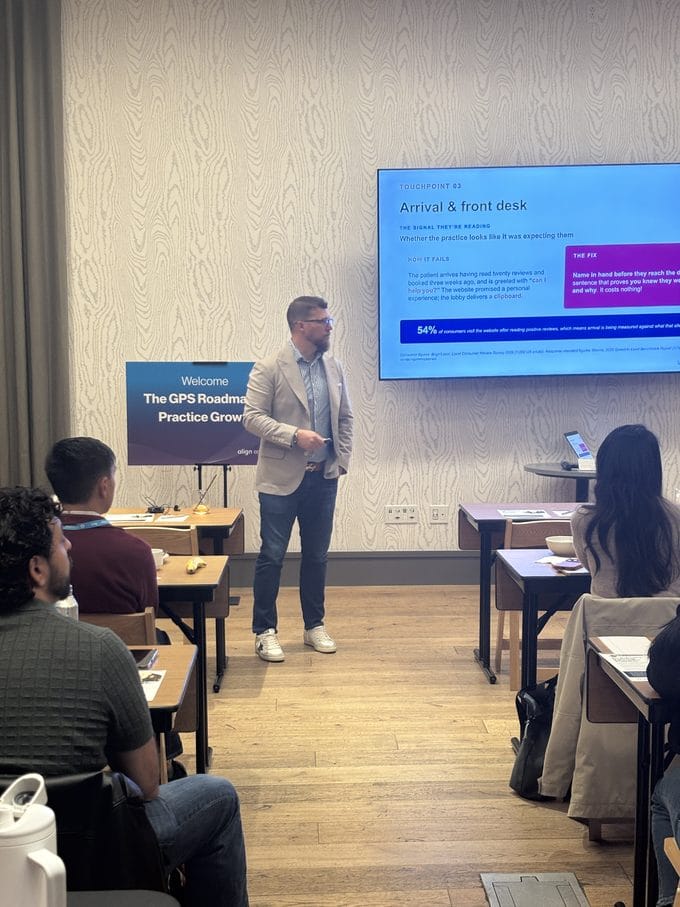
That was the room in Menlo Park on Friday for Roadmap: On the Margin Improvements for Major Practice Growth, a full-day course from Dr. Jason Gladwell and Emily Abecasis, hosted by Align Technology. Doctors and team members sat side by side all day, which is honestly my favorite way to see this work happen.
Here are my biggest takeaways.
The Uncomfortable Opening: Record Volume, Flat Growth
So everyone’s growing, right? Not quite.
Only about 1 in 3 practices grew more than 10% last year, and nearly 14% shrank by more than 10%. The middle is getting squeezed.
His point: a mature practice usually doesn’t need a new location, a new associate or a rebrand. It needs to get a little better at the numbers it already tracks. Planet DDS modeled a 5-point lift in case acceptance (68.3% to 73.3%) across its orthodontic network and found it was worth about $942 per practice, per day.
Then they did the math on an average practice. Move new patient exams and case acceptance up just 2% each, and you get roughly 17 more starts and about $105,000 more production a year. That example assumes a $6,000 case fee, so plug in your own numbers. That’s two levers. The day covered six.
As a performance-driven marketer, I loved how every margin session ended: the same three questions on a worksheet.
- What’s my number today?
- What’s the one marginal move?
- What’s it worth annualized?
One number. One move. One dollar figure. Every time.
1. The Experience Margin: Your Review Profile Has an Expiration Date
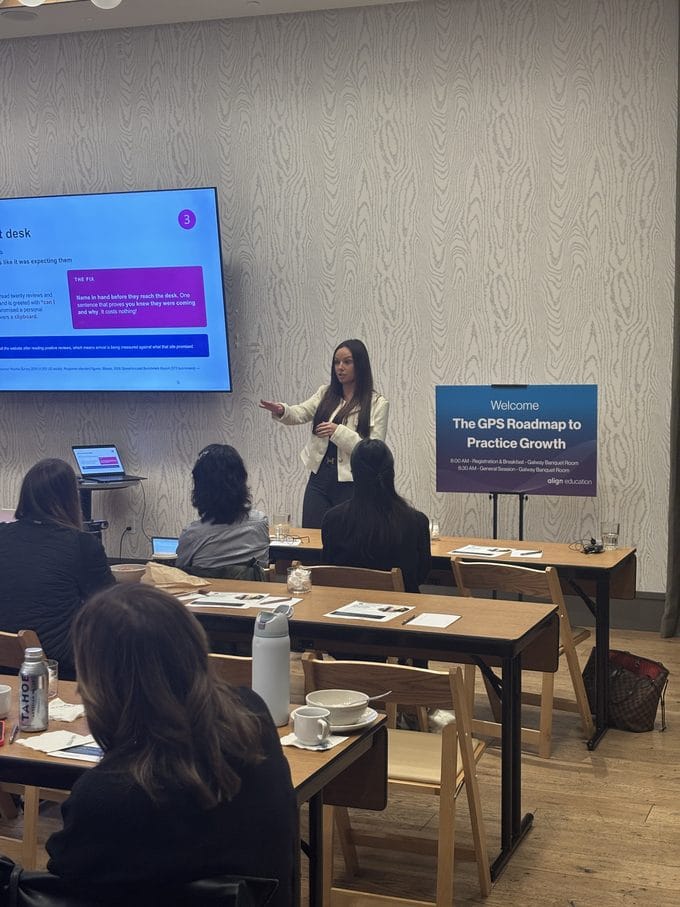
Emily walked through how fast patient research has changed, using BrightLocal’s 2026 consumer survey. AI tools went from 6% to 45% as a source of local business recommendations in a single year. Nearly half of consumers won’t use a business with fewer than 20 reviews. And 74% only care about reviews from the last three months.
That last one changes everything. A review profile is a perishable asset, not an achievement.
She also flagged something most practices haven’t acted on yet. In September 2026, the FDA published consumer guidance saying it hasn’t authorized clear aligners sold direct-to-consumer without a dentist or orthodontist supervising. For years, DTC owned the price-and-convenience story. Most practice websites still don’t say a word about this shift. (Opportunity, anyone?)
The practical piece was a walk through five touchpoints, each with one named owner: pre-visit, first contact, arrival, the consult room and post-visit follow-up. Then came the “Mirror Test.” Search your own practice like a stranger would. Ask an AI assistant who the best orthodontist in town is. Time how long it takes to book from your website on your phone.
2. The Conversion Margin: Stop Selling the Appliance
Nobody wakes up wanting a year of aligners. They want to feel confident in photos, smile at their wedding, keep their natural teeth. The point here: find that motivation before you explain treatment. Use scans and simulations to show what’s possible, as illustrations, not promises.
What I wrote down:
- Urgency comes from relevance, not pressure. Help patients understand what waiting actually costs them.
- Cost is the #1 objection, so talk monthly. Quote the monthly payment first, then the total, and offer two or three options.
- A.I.R. out concerns: Acknowledge, Interview, Respond. Understand the objection before you answer it.
- Conversion is a team sport. The TC may close, but the front desk, clinical team and doctor all shape how confident the patient feels.
3. The Access Margin: Virtual Care Stalls for Boring Reasons
Dr. G was candid here, which is my favorite kind of teaching. Virtual care rarely fails because of the tech. It fails because the practice keeps its old schedule, so no chair time is ever freed. Nobody owns the monitoring queue. Every alert goes to the doctor. And it gets pitched to patients as “fewer visits,” when patients actually want more attention.
The fix is a sequence: decide what the freed chair time is for before you launch, name one person to own the queue, write the escalation rule, tell patients “we’ll keep an eye on you between visits,” and measure at 90 days.
4. The Treatment Margin: Retention Is the Next Relationship
This margin opens a whole separate revenue line from patients you already have. Dr. G walked through how he uses DSP, Align’s subscription model for Invisalign® touch-ups and Vivera™ retainers, for post-braces touch-ups, retreatment, short cases and retention.
Two ideas I loved. Plan the case backward from retention, because a planned refinement is cheap and a surprise is not. And quote touch-ups at the consult as a range, never after the plan is built.
Then he challenged the room on something that genuinely stuck with me. Why do we celebrate dismissing patients we spent years building relationships with? Retainers stretch and teeth move for life. Retention isn’t the end of treatment. It’s the next relationship.
5. The Affordability Margin: Make It Easy to Say Yes
Emily took on the money conversation head-on. Affordability is often perception, not reality. People pay for what they value, and treatment feels possible when it’s presented as necessary and accessible rather than as a luxury.
The principles were refreshingly simple: quote monthly first, keep the monthly payment low, give two or three options, and remove friction with things like auto-pay. And never make a financial decision for a patient before they’ve had the chance to make it themselves.
6. The Demand Margin: The Event Is Only as Good as Who Walks In
The last session brought it home with GPS’s four pillars of a Smile Event: Marketing, Team Prep, Day-of Execution and Follow-Up.
An Instagram post the week before is not a plan. Start weeks out, lead with external marketing, then fill in with internal referrals. Rehearse until the team could run the day in their sleep, because patients mirror the energy they feel from your staff. And the event doesn’t end when the last patient leaves. Anyone who didn’t start that day should hear from you right away, personally, and more than once.
Final Thought: Small Moves Multiply
If Roadmap reinforced one thing for me, it’s this: the next stage of growth for a great practice isn’t one big fix. It’s six small ones on the same patient flow, and small moves multiply.
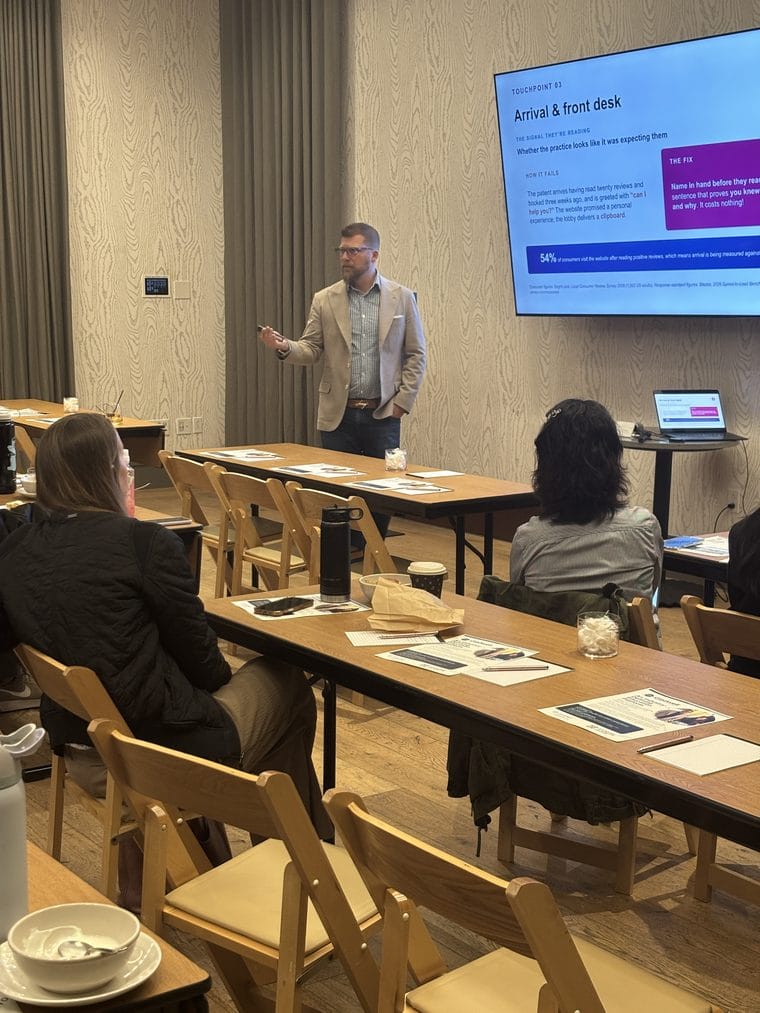
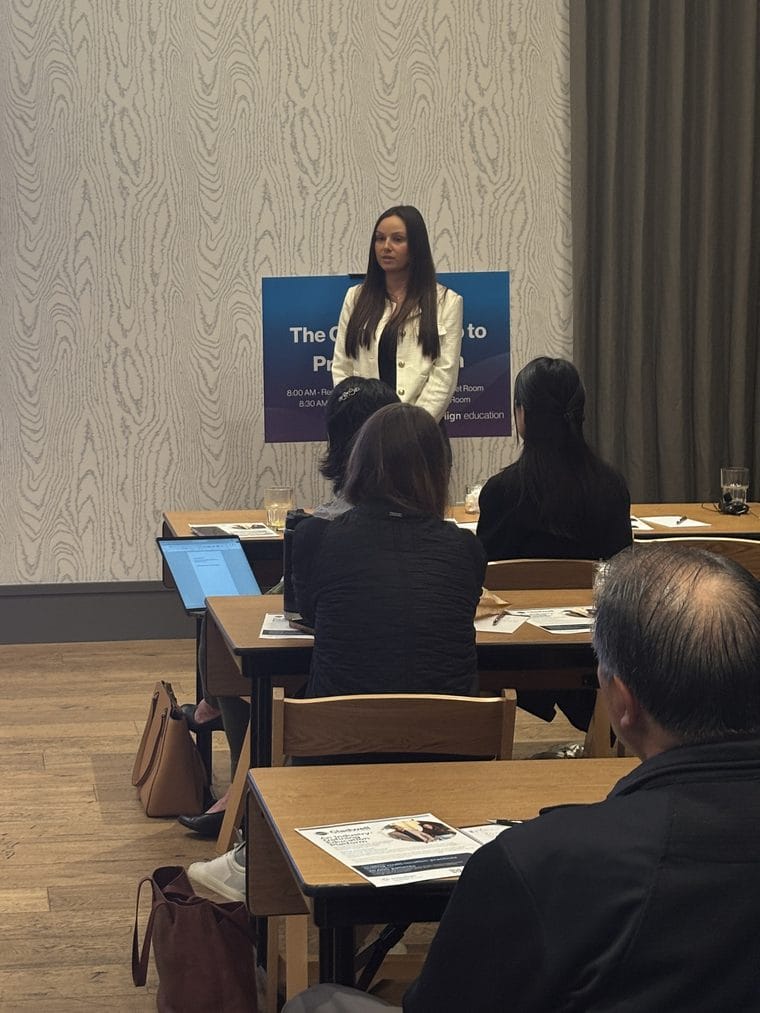
What I appreciated most is that nobody was asked to rebuild everything Monday. Pick one number. Make one move. Put a dollar figure on it. Then do it again.
A huge thank you to Align Technology for hosting, to the team at The Park James, and to every doctor and team member who gave up a Friday to work on their practice instead of in it.
Keep Building Your Margins with GPS
Two guided programs launch in 2027:
- GPS Foundations, a six-month guided cohort and the starting point for real practice growth
- GPS Premium+, a twelve-month guided cohort with unlimited access to the complete, ever-growing GPS library
Want to talk about where your practice’s margins are? Connect with Team GPS.